Exonerated
Anthony Ray Hinton
Spotlight case — not a Xonorate client
30 years on Death Row
Lost
Alabama
Jefferson County
Murder (two counts of capital murder)
Conviction
Nearly 30 years
Incarcerated, almost all on death row (1985–2015)
2
Counts of capital murder; sentenced to death
6
Bullets from 3 crimes the State claimed came from one gun
~1 hour
Jury deliberation before convicting (Sept. 17, 1986)
10-2
Jury vote for death (Dec. 1986)
$1,000
Expert-funding amount trial counsel wrongly believed was the cap
9-0
Unanimous U.S. Supreme Court per curiam ruling, Feb. 24, 2014
29
Age at the date of the reported crime
“All they had to do was test the gun.”
Case intelligence
The facts, the evidence, the open questions.
The facts, evidence, developments, and unanswered questions surrounding this case.
The story
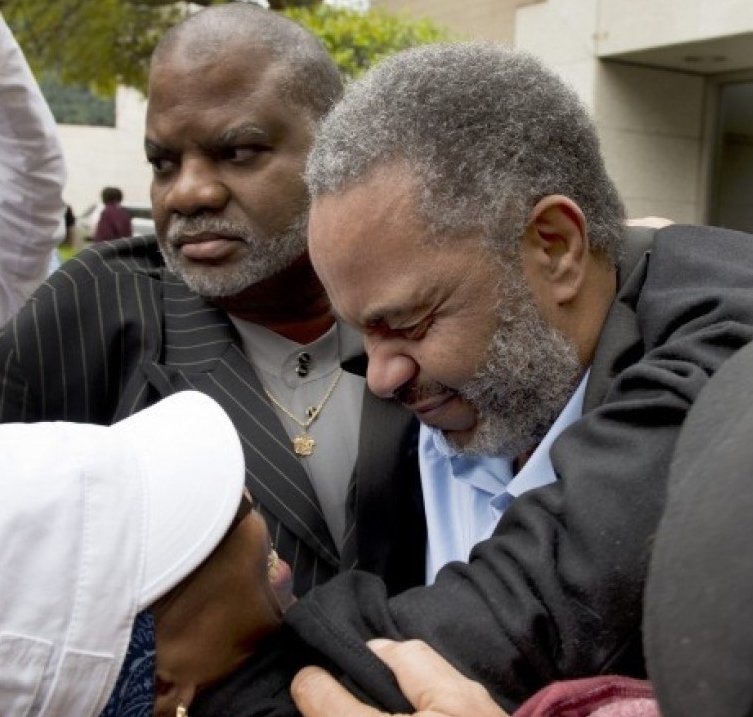
In 1985, two fast-food restaurant managers in the Birmingham, Alabama area — John Davidson (Davison) and Thomas Vason — were robbed and fatally shot, and a third manager, Sidney Smotherman, was robbed and shot but survived. Smotherman picked Anthony Hinton, then 29, out of a photo lineup after an acquaintance said a composite sketch resembled Hinton, and state forensic examiners testified that all six bullets from the three crimes were fired by an old .38-caliber revolver found under Hinton's mother's mattress; that ballistics claim was the only evidence tying him to the murders. A Jefferson County jury convicted him on September 17, 1986, after about an hour of deliberation, and in December 1986 the jury voted 10-2 for death; he spent nearly three decades on Alabama's death row before the charges were dismissed in 2015.
What we know
Murder (two counts of capital murder)
Conviction, 1986
Death
Sentence
Alabama
State
Jefferson
County
Black
Race / ethnicity
Male
Sex
29
Age at time of crime
No
DNA evidence involved
What raises questions
Mistaken/suggestive eyewitness identification by surviving victim Sidney Smotherman; false or misleading forensic (firearms/toolmark) evidence from the Alabama Department of Forensic Sciences; and inadequate legal defense — trial counsel wrongly believed defense expert funding was capped at $1,000 (an older $1,000/$500 cap had been replaced by a statute allowing "any expenses reasonably incurred" with advance judicial approval), so he hired an expert he knew was unqualified.
The evidence
Evidence of innocence
Alibi at locked warehouse
Hinton testified he was working inside a warehouse where employees were locked in from midnight to 6 a.m. on the night Smotherman was robbed and shot. Co-workers and a supervisor supported the alibi that he was at work about 15 miles away.
Consistent denial
Hinton denied involvement in all three crimes.
Vehicle mismatch
Hinton said he drove a small red Nissan and owned a small yellow Volkswagen, neither matching the larger car Smotherman described his attacker driving.
No other evidence from home search
Police searching his home found the old, very worn .38 revolver but no other evidence linking him to the crimes.
Polygraph showed no deception
Hinton took a polygraph and the examiner found no deception when he denied involvement; the trial judge kept the results from the jury.
State's own re-examination cleared the gun
Before retrial, the State's own re-examination concluded the bullets could not be linked to the gun.
Newly discovered evidence
Three leading firearms examiners (2002)
Post-conviction testimony from three top firearms/toolmark examiners established that the crime-scene bullets could not be matched to the revolver from Hinton's home, and may not have come from the same gun at all.
Prosecution experts agreed before retrial
New prosecution experts re-examined the evidence ahead of retrial and reached the same conclusion, which triggered the dismissal of charges in 2015.
Due-process violations
Ineffective assistance of counsel
The U.S. Supreme Court held unanimously in 2014 that counsel's failure to seek adequate expert funds was based on ignorance of the amended funding statute rather than strategy, rendering his performance constitutionally deficient under the Sixth Amendment. The Registry lists "Inadequate Legal Defense" as a contributing factor.
Misunderstood expert-funding statute
The Registry notes the funding statute, once capped, had been amended before Hinton's trial to permit "any expenses reasonably incurred" with advance approval by the trial judge.
Reported prosecutorial bias
DPIC reports the prosecutor had a documented history of racial bias and said he could tell Hinton was guilty and "evil" just by looking at him. Stevenson and Hinton have both described race and poverty as central to the conviction and to the State's years-long refusal to retest the gun; the Registry does not list Official Misconduct as a contributing factor in this case.
Unreliable evidence
State firearms/toolmark testimony
State examiners testified that all six bullets from the three crimes came from the revolver found under Hinton's mother's mattress. This was the sole physical evidence against him and was later refuted.
Mistaken eyewitness identification
Smotherman picked Hinton from a photo lineup after a newspaper artist's composite sketch and a tip from Quincy's employee Reginald White that the sketch looked like Hinton.
Unqualified defense ballistics expert
The defense's own expert, hired for the $1,000 counsel believed was available, had no training or experience in firearms identification, did not know how to use a comparison microscope, did not test-fire the gun, and had sight in only one eye. He testified his results were inconclusive and was badly discredited on cross-examination.
Case timeline
1986
Conviction
Murder (two counts of capital murder)
2015
Exoneration
Equal Justice Initiative attorney Bryan Stevenson took the case and, in post-conviction proceedings, presented three leading firearms examiners who testified in 2002 that the crime-scene bullets could not be matched to the revolver from Hinton's home and may not even have come from a single gun. State courts denied relief until February 24, 2014, when the U.S. Supreme Court, in a unanimous per curiam decision (Hinton v. Alabama, 571 U.S. 263), held trial counsel's performance constitutionally deficient under Strickland because his failure to seek additional expert funding rested on a mistaken belief about the law, and remanded on prejudice. A new trial was ordered; preparing for retrial, the State's own new experts also concluded they could not link the victims' bullets to the gun. On April 2, 2015, a judge granted the Jefferson County District Attorney's motion to dismiss the charges, and Hinton walked free April 3, 2015. Efforts to pass legislation compensating him failed in 2017.
Where it stands
Exonerated
Equal Justice Initiative attorney Bryan Stevenson took the case and, in post-conviction proceedings, presented three leading firearms examiners who testified in 2002 that the crime-scene bullets could not be matched to the revolver from Hinton's home and may not even have come from a single gun. State courts denied relief until February 24, 2014, when the U.S. Supreme Court, in a unanimous per curiam decision (Hinton v. Alabama, 571 U.S. 263), held trial counsel's performance constitutionally deficient under Strickland because his failure to seek additional expert funding rested on a mistaken belief about the law, and remanded on prejudice. A new trial was ordered; preparing for retrial, the State's own new experts also concluded they could not link the victims' bullets to the gun. On April 2, 2015, a judge granted the Jefferson County District Attorney's motion to dismiss the charges, and Hinton walked free April 3, 2015. Efforts to pass legislation compensating him failed in 2017.
Take action
No active petition for this case yet.
Sources & records
Case information presented by Xonorate is based on available court records, case materials, reporting, and other documented sources.
Want to understand the issues surrounding this case?
Ask Xonorate can help you explore the research, legal framework, and related Xonorate material.
Ask Xonorate →More cases
Comments
Sign in to leave a comment.