Justice restored
Exonerated
People who were wrongfully convicted and have since been exonerated — what contributed to their conviction, and what led to their release.
 Taron HillSpotlight case — not a Xonorate clientConvicted of Two counts of murder and related weapons offensesNew Jersey, Camden County2006 → 202116 years, 7 months lost
New Jersey's Attorney General's Office Conviction Review Unit reviewed the case and found clear and convincing evidence Hill should not have been convicted, citing the flawed single-photo identification and the informants' recantations. Camden County Superior Court Judge Edward J. McBride Jr. vacated the conviction on July 9, 2021 — the Conviction Review Unit's first exoneration. Attorney Justin Bonus represented Hill.
Mistaken witness identificationPerjury or false accusationJailhouse informantsInadequate legal defense Kevin BakerSpotlight case — not a Xonorate clientConvicted of Murder, Conspiracy, Illegal Use of a WeaponNew Jersey, Camden County1996 → 2020Nearly 25 years (arrested February 15, 1995 — released February 11, 2020) lost
Starting in 2011, the Last Resort Exoneration Project at Seton Hall Law School re-investigated the case, eventually obtaining a 911 call recording that multiple witnesses identified as co-defendant Sean Washington's voice reporting the bodies — evidence never turned over to the defense at trial. Forensic pathologist Dr. Michael Baden and firearms expert Lucien Haag testified that bullet trajectories, ricochet "bow effect" scoring, and soil mineralization on the recovered bullets showed victim Margaret Wilson had been shot while lying on the ground — directly contradicting eyewitness Denise Rand's trial testimony that she saw the victims shot while standing and running. On December 26, 2019, the Appellate Division of the New Jersey Superior Court unanimously vacated both convictions, finding the new evidence "powerfully undermines" Rand's account. The Camden County Prosecutor's Office declined to retry the case, and a judge dismissed all charges on February 11, 2020. Baker later settled a state compensation claim for $1.25 million.
Perjury or false accusationFalse or misleading forensic evidenceInadequate legal defenseSource: National Registry of Exonerations ↗ Sean WashingtonSpotlight case — not a Xonorate clientConvicted of Murder, Conspiracy, Illegal Use of a WeaponNew Jersey, Camden County1996 → 2020Nearly 25 years (arrested March 21, 1995 — released February 11, 2020) lost
Starting in 2011, the Last Resort Exoneration Project at Seton Hall Law School re-investigated the case and obtained the 911 call recording, which multiple witnesses identified as Washington's own voice reporting the bodies. Forensic pathologist Dr. Michael Baden and firearms expert Lucien Haag testified that bullet trajectories, ricochet "bow effect" scoring, and soil mineralization on the recovered bullets showed Wilson had been shot while lying on the ground — directly contradicting Rand's trial testimony that she saw the victims shot while standing and running. On December 26, 2019, the Appellate Division of the New Jersey Superior Court unanimously vacated both convictions, finding the new evidence "powerfully undermines" Rand's account. The Camden County Prosecutor's Office declined to retry the case, and a judge dismissed all charges on February 11, 2020. Washington later settled a state compensation claim for $1.25 million.
Perjury or false accusationFalse or misleading forensic evidenceInadequate legal defenseSource: National Registry of Exonerations ↗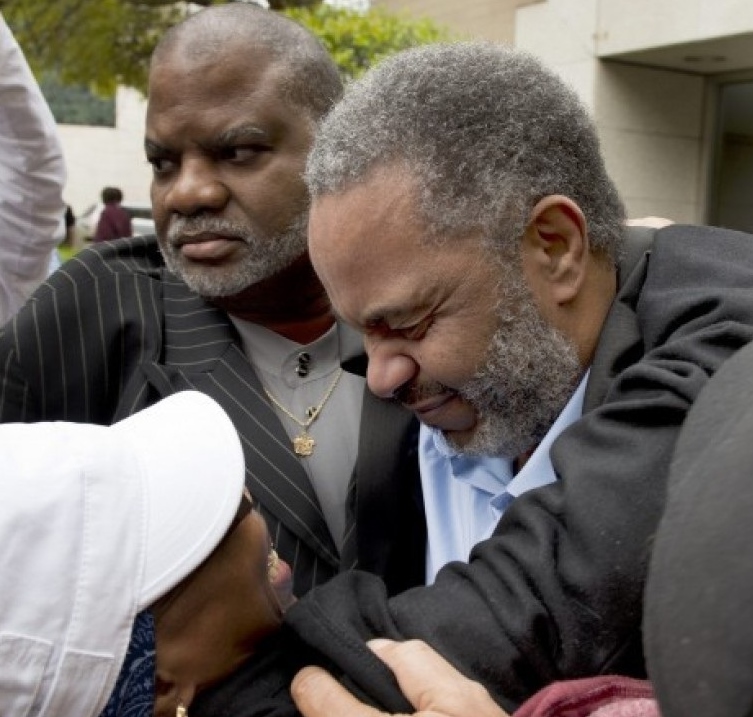 Anthony Ray HintonSpotlight case — not a Xonorate clientConvicted of Murder (two counts of capital murder)Alabama, Jefferson County1986 → 201530 years on Death Row lost
Equal Justice Initiative attorney Bryan Stevenson took the case and, in post-conviction proceedings, presented three leading firearms examiners who testified in 2002 that the crime-scene bullets could not be matched to the revolver from Hinton's home and may not even have come from a single gun. State courts denied relief until February 24, 2014, when the U.S. Supreme Court, in a unanimous per curiam decision (Hinton v. Alabama, 571 U.S. 263), held trial counsel's performance constitutionally deficient under Strickland because his failure to seek additional expert funding rested on a mistaken belief about the law, and remanded on prejudice. A new trial was ordered; preparing for retrial, the State's own new experts also concluded they could not link the victims' bullets to the gun. On April 2, 2015, a judge granted the Jefferson County District Attorney's motion to dismiss the charges, and Hinton walked free April 3, 2015. Efforts to pass legislation compensating him failed in 2017.
Mistaken witness identificationFalse or misleading forensic evidenceInadequate legal defenseSource: National Registry of Exonerations ↗ Ricky JacksonSpotlight case — not a Xonorate clientConvicted of Aggravated murder, aggravated attempted murder, and aggravated robberyOhio1975 → 201439 years lost
A magazine article by reporter Kyle Swenson re-examined the case and revealed that Vernon had been paid $50 by Ann Robinson's husband to testify - a fact Vernon never disclosed on the stand. Swenson could not get Vernon to talk, so he approached Vernon's pastor, Arthur Singleton; when Singleton visited Vernon in a hospital in 2013, where Vernon was being treated for high blood pressure, and raised the article again, Vernon admitted he had lied. The Ohio Innocence Project re-investigated and obtained police reports and evidence of witness intimidation and nondisclosure, and in November 2014 Judge Richard McMonagle held a hearing on Jackson's motion for a new trial at which Vernon testified that police fed him the details of the crime and that he had never seen the attack; the convictions were overturned and the charges dismissed in November 2014.
Perjury or false accusationOfficial misconductSource: National Registry of Exonerations ↗- Ronnie LongSpotlight case — not a Xonorate clientConvicted of First-degree rape and burglaryNorth Carolina, Cabarrus County1976 → 202044 years, 3 months, 17 days lost
On April 20, 2005 the North Carolina Center on Actual Innocence moved for release of all state, police, and hospital records; the court granted the motion in June 2005. Records that followed showed the SBI had tested 14 items in 1976 (hair, clothing, carpet samples, paint chips, matchbooks) and found nothing connecting Long to the crime. A 2008 motion for appropriate relief on Brady grounds was denied in 2009 and affirmed by default when the N.C. Supreme Court deadlocked in February 2011. A federal habeas petition filed with Duke's Wrongful Convictions Clinic in 2016 was denied by the district court and, 2-1, by a Fourth Circuit panel on January 8, 2020 (Judge Thacker dissenting). On August 24, 2020 the Fourth Circuit, sitting en banc, reversed 9-6, with Judge Thacker writing the majority opinion. U.S. District Judge Catherine Eagles granted the writ on August 27, 2020 and Long was released that day; the Cabarrus County District Attorney's Office dismissed the charges on August 28. Governor Roy Cooper issued a pardon of innocence on December 17, 2020, and Long received the statutory maximum of $750,000 in state compensation in March 2021. He sued the City of Concord and the SBI in federal court; in January 2024 Concord agreed to pay $22 million and the State of North Carolina $3 million.
Mistaken witness identificationFalse or misleading forensic evidencePerjury or false accusationOfficial misconductSource: National Registry of Exonerations ↗ 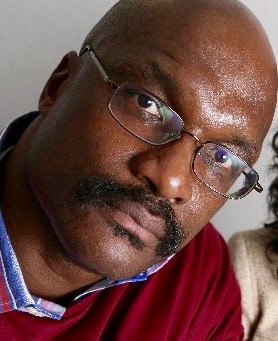 Byron HalseySpotlight case — not a Xonorate clientConvicted of Murder; Sexual AssaultNew Jersey, Union County1988 → 200719 years in prison per the National Registry of Exonerations (1988 conviction to release on May 15, 2007); news coverage and the Innocence Project counted 22 years from his 1985 arrest to the dismissal of all charges, and a later federal opinion states more than twenty-one years. The Registry also notes he served nearly half his life in solitary confinement. lost
After New Jersey's post-conviction DNA access law took effect in July 2002, the Innocence Project secured DNA testing of crime-scene evidence in 2006, conducted in state labs and at Orchid Cellmark, which provided some testing pro bono. Testing of semen and cigarette butts excluded Halsey and implicated Clifton Hall, then imprisoned in New Jersey for three separate Plainfield sex crimes committed in 1991 and 1992. In May 2007 the Innocence Project joined the Union County prosecutor's office in moving to vacate the convictions; a judge granted the motion and Halsey was released May 15, 2007, wearing an electronic monitoring bracelet while prosecutors reinvestigated. On July 9, 2007, prosecutors dismissed all charges before Superior Court Judge Stuart L. Peim. Halsey was the 205th person nationwide and the fifth in New Jersey exonerated by DNA.
False confessionPerjury or false accusationFalse or misleading forensic evidenceOfficial misconductDNA evidenceSource: National Registry of Exonerations ↗ Robert DuBoiseSpotlight case — not a Xonorate clientConvicted of First-degree murder and attempted sexual battery (rape/murder of Barbara Grams)Florida1985 → 2020Nearly 37 years (arrested October 1983; released from prison August 27, 2020), including roughly three years on death row. He was 18 at arrest and 55 at release. lost
In 2006 DuBoise moved for post-conviction DNA testing, but the State said all trial evidence, including the rape kit, had been destroyed in 1990. In 2018 the Innocence Project (attorney Susan Friedman), with local support from Seth Miller of the Innocence Project of Florida, began representing him while Hillsborough State Attorney Andrew Warren's Conviction Review Unit reinvestigated. A defense expert, Dr. Freeman, concluded the beeswax molds produced distorted impressions, the formaldehyde-preserved cheek tissue was ill-suited for comparison, and that the mark on Grams's cheek was not even a bitemark. In August 2020 CRU supervising attorney Teresa Hall located three autopsy rape-kit slides that had sat in the Medical Examiner's office since 1983; testing found a major and a minor male contributor on the vaginal slide and excluded DuBoise, his brother Victor DuBoise, and friend Raymond Garcia, producing a presumptive CODIS hit to another man. DuBoise's sentence was reduced to time served and he walked out of prison on August 27, 2020; Hillsborough Circuit Judge Christopher Nash granted the motion to vacate on September 14, 2020, and Warren's office dismissed the charges that day. He was reported as Florida's 30th death-row exoneree since 1973, and on August 4, 2022, a Tampa grand jury indicted Amos Robinson and Abron Scott (spelled "Abraham Scott" in the Registry entry) for the deaths of Barbara Grams and Linda Lansen (also spelled Lanson).
Source: National Registry of Exonerations ↗ Kennedy BrewerSpotlight case — not a Xonorate clientConvicted of Murder (most serious crime), with additional convictions for Rape and Kidnapping; contemporaneous coverage and the Innocence Project describe the conviction as capital murder and sexual battery, entered March 24, 1995.Mississippi, Noxubee County1995 → 200815 years lost
In 2001, DNA testing on sperm recovered from the victim proved Brewer was not the source and his conviction was overturned; it was vacated the following year and he was moved from death row to pre-trial detention. The prosecution said it would retry him, but the case sat untried for five more years. In 2007, because of conflicts of interest in the Noxubee County District Attorney's office, Ben Creekmore of Oxford, Mississippi, was appointed Special Prosecutor; he declined to seek the death penalty and did not oppose bail, and Brewer was released in August 2007. During retrial preparation the Innocence Project asked the Mississippi Attorney General's office to intervene, and DNA testing matched the unidentified 2001 profile to Justin Albert Johnson, 51, an original suspect with a history of sexual assaults who had lived near both victims. Johnson was arrested and confessed to Christine Jackson's murder and to the September 1990 rape and murder of three-year-old Courtney Smith, insisting he acted alone in both. On February 15, 2008, the prosecution dismissed the charges and Brewer was exonerated -- Mississippi's first post-conviction DNA exoneration.
Perjury or false accusationFalse or misleading forensic evidenceOfficial misconductDNA evidenceSource: National Registry of Exonerations ↗ Anthony WaysSpotlight case — not a Xonorate clientConvicted of Murder, Robbery, Illegal Use of a WeaponNew Jersey, Camden County1991 → 200514 years (arrested April 25, 1989 — released on bond June 2004; charges dismissed October 19, 2005) lost
At a 2000 post-conviction hearing, several witnesses gave new or recanted testimony: Tyrone Williams said Franklin King had tried to sell him a .44 Magnum hours after the murder and admitted having "a body on the gun"; Donna Carter recanted her trial testimony, saying she had falsely implicated Ways because she was high, afraid of being charged, and had been coached by the prosecutor; alibi witness Todd Johnson admitted he had falsely placed Ways at a bar that night; a retired Camden police officer testified King had told him, before any gun evidence was public, "I'm not the only one in Camden with a .44 Magnum"; and Ways's own cousin testified King twice admitted to him, in prison, that he shot Weist. King himself testified at the hearing that Ways was innocent — "someone else did it. It wasn't this guy" — while denying he was the shooter. In 2004, the New Jersey Supreme Court reversed Ways's conviction, finding the new evidence "sufficiently implicated King in the shooting" that it likely would have led to Ways's acquittal at trial. Rather than face a retrial, Camden County prosecutors dismissed the murder, robbery, and weapons charges in October 2005 after Ways pleaded guilty to unrelated witness-tampering and hindering-apprehension charges, for which he was sentenced to time served. He settled a wrongful-conviction lawsuit for $280,000 in 2008 and has since advocated for other wrongfully convicted people, including serving on the advisory committee for an innocence project at Rutgers University.
Mistaken witness identificationPerjury or false accusationOfficial misconductSource: National Registry of Exonerations ↗