Exonerated
Robert DuBoise
Spotlight case — not a Xonorate client
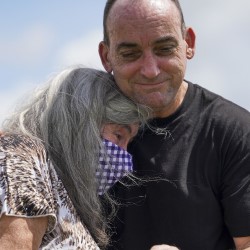
Nearly 37 years (arrested October 1983; released from prison August 27, 2020), including roughly three years on death row. He was 18 at arrest and 55 at release.
Lost
Florida
State
First-degree murder and attempted sexual battery (rape/murder of Barbara Grams)
Conviction
37 years
Wrongfully imprisoned (nearly 37: October 1983 – August 27, 2020)
3 years
On death row
18
Age at arrest
55
Age at release
September 14, 2020
Date exonerated
13 months
Informant Claude Butler's 5-year sentence cut to time served
$14 million
Settlement with the City of Tampa (2024)
$1.85 million
State claims bill signed in 2023
~$19 million
Reported combined compensation
“I never lost faith that today would come.”
Case intelligence
The facts, the evidence, the open questions.
The facts, evidence, developments, and unanswered questions surrounding this case.
The story
Robert DuBoise was 18 years old when he was arrested in October 1983 for the rape and beating death of 19-year-old Barbara Grams, who was found behind a dental office in Tampa on August 19, 1983, as she walked home from her job at a shopping-mall restaurant. He was convicted in 1985 on the strength of bite-mark testimony from forensic odontologist Dr. Richard Souviron and the word of a jailhouse informant, Claude Butler, and was sentenced to death after the trial judge overrode the jury's recommendation of life. He spent nearly 37 years in prison, including about three years on death row, before DNA testing on rape-kit slides long believed destroyed excluded him and he was exonerated on September 14, 2020.
What we know
First-degree murder and attempted sexual battery (rape/murder of Barbara Grams)
Conviction, 1985
Death. The jury recommended life; trial judge Harry Lee "Hank" Coe III overrode that recommendation and imposed death. In February 1988 the Florida Supreme Court overturned the death sentence, holding the override was improper, and DuBoise was resentenced to life imprisonment.
Sentence
Florida
State
0
Age at time of crime
What raises questions
Discredited bite-mark (forensic odontology) evidence; false/incentivized jailhouse informant testimony; undisclosed benefits to the informant and a false statement by the prosecutor about those benefits; official misconduct alleged against Tampa police investigators; no eyewitness or other physical evidence tying him to the crime.
The evidence
Evidence of innocence
DNA excluded DuBoise
2020 DNA testing of three preserved rape-kit slides excluded DuBoise as both the major and minor male contributor.
Alleged accomplices also excluded
The same testing excluded his brother Victor DuBoise and Raymond Garcia, the two men the jailhouse informant claimed had committed the crime with him.
No eyewitness, no physical link
No eyewitness placed DuBoise near the crime scene, and other physical evidence excluded him as the perpetrator, per Innocence Project counsel.
State Attorney's assessment
State Attorney Andrew Warren stated there was "not one shred of evidence" that DuBoise committed the crime.
CODIS hit to other suspects
The DNA profile produced a CODIS hit leading to two other men, Amos Robinson and Abron/Abraham Scott, who were indicted in 2022 for Grams's murder and a second 1983 murder.
Consistent claim of innocence
DuBoise maintained his innocence for 37 years, writing letters and pursuing his claim throughout his incarceration.
Newly discovered evidence
Rape-kit slides located in 2020
In August 2020, CRU supervising attorney Teresa Hall located three autopsy rape-kit slides at the Medical Examiner's office — evidence the State had previously told the court was destroyed in 1990.
New DNA technology
DNA technology unavailable at the time of trial produced profiles from those slides.
Bite-mark evidence debunked by new expert review
Dr. Freeman concluded the mark on Grams's cheek was not a bitemark at all, that beeswax molds distorted the impressions of DuBoise's teeth, and that formaldehyde preservation of the cheek tissue made it unsuitable for comparison.
Informant's hidden sentence reduction
The Innocence Project investigation discovered that informant Claude Butler's five-year sentence had been reduced to time served (13 months) after State Attorney E.J. Ober filed a motion to mitigate on Butler's behalf in June 1985 — after DuBoise's trial.
Undisclosed second-witness relationship
Investigators uncovered a previously undisclosed relationship between a second informant/witness (Andrusckiewiecz) and prosecutors in an unrelated murder case.
Post-trial scientific consensus
Scientific consensus developed after the trial established bite-mark comparison as unreliable; the Hillsborough CRU announced it would work with the Innocence Project to review other county convictions that used bite-mark evidence.
Due-process violations
False statement to the jury about informant benefits
Prosecutor Ober told the jury in closing that he had no previous contact with Butler and that "We made no promises to him [...] we did nothing for him. He asked nothing." That was false: Ober had overseen the indictment on one of the charges Butler pleaded to, and later moved to mitigate Butler's sentence, which was cut to 13 months.
Jury misled about informant's incarceration
Jurors were told the informant was in prison and would remain there to serve his entire sentence — which did not happen.
Undisclosed benefits to second witness
There was an undisclosed benefits/relationship between prosecutors and a second witness (Andrusckiewiecz) in an unrelated murder case.
Appellate claims
On direct appeal DuBoise argued the dental casts of his teeth were the product of an illegal search, and that use of statements he allegedly made to Butler was unconstitutional because Butler was acting as an agent of the state; he also argued Judge Coe abused his discretion in overriding the jury's life recommendation, and the Florida Supreme Court agreed on that point in 1988.
Civil rights lawsuit allegations
DuBoise's October 2021 federal civil rights lawsuit against the City of Tampa, four police investigators, and Dr. Souviron alleged (not adjudicated) that investigators conspired with jailhouse informants to fabricate testimony; that beeswax was used for dental impressions "only because another officer in the Tampa Police Department operated a honey business on the side"; and that Souviron had told a police chiefs' gathering, "if you tell me that is the guy that did it, I will go into court and say that is the guy that did it." The City of Tampa settled for $14 million in 2024.
Unreliable evidence
Discredited bite-mark testimony
Dr. Richard Souviron, the odontologist known for testifying in the Ted Bundy trial, twice opined that DuBoise's dentition matched a mark on Grams's cheek. This was the only physical evidence purporting to place DuBoise at the scene, and bite-mark comparison has since been widely discredited.
Beeswax dental molds
The first mold of DuBoise's teeth was made in beeswax; a second, sturdier mold was taken on October 23, 1983, and Souviron again reported a match.
Jailhouse informant Claude Butler
Butler, held in the jail's mental-health unit alongside DuBoise, told Detective Saladino in January 1984 — after being introduced by Detective John Counsman, for whom he had informed before — that DuBoise admitted he, his brother Victor, and Raymond Garcia raped and murdered Grams during a robbery. Butler was facing kidnapping, armed robbery, probation-violation and assault-on-an-officer charges and up to two life sentences; the Innocence Project found significant inconsistencies in his trial testimony, and his account was contradicted by the DNA.
Second witness's claim
Joanne Suarez told police DuBoise said to her in August 1983 that he had killed someone.
Case timeline
1985
Conviction
First-degree murder and attempted sexual battery (rape/murder of Barbara Grams)
2020
Exoneration
In 2006 DuBoise moved for post-conviction DNA testing, but the State said all trial evidence, including the rape kit, had been destroyed in 1990. In 2018 the Innocence Project (attorney Susan Friedman), with local support from Seth Miller of the Innocence Project of Florida, began representing him while Hillsborough State Attorney Andrew Warren's Conviction Review Unit reinvestigated. A defense expert, Dr. Freeman, concluded the beeswax molds produced distorted impressions, the formaldehyde-preserved cheek tissue was ill-suited for comparison, and that the mark on Grams's cheek was not even a bitemark. In August 2020 CRU supervising attorney Teresa Hall located three autopsy rape-kit slides that had sat in the Medical Examiner's office since 1983; testing found a major and a minor male contributor on the vaginal slide and excluded DuBoise, his brother Victor DuBoise, and friend Raymond Garcia, producing a presumptive CODIS hit to another man. DuBoise's sentence was reduced to time served and he walked out of prison on August 27, 2020; Hillsborough Circuit Judge Christopher Nash granted the motion to vacate on September 14, 2020, and Warren's office dismissed the charges that day. He was reported as Florida's 30th death-row exoneree since 1973, and on August 4, 2022, a Tampa grand jury indicted Amos Robinson and Abron Scott (spelled "Abraham Scott" in the Registry entry) for the deaths of Barbara Grams and Linda Lansen (also spelled Lanson).
Where it stands
Exonerated
In 2006 DuBoise moved for post-conviction DNA testing, but the State said all trial evidence, including the rape kit, had been destroyed in 1990. In 2018 the Innocence Project (attorney Susan Friedman), with local support from Seth Miller of the Innocence Project of Florida, began representing him while Hillsborough State Attorney Andrew Warren's Conviction Review Unit reinvestigated. A defense expert, Dr. Freeman, concluded the beeswax molds produced distorted impressions, the formaldehyde-preserved cheek tissue was ill-suited for comparison, and that the mark on Grams's cheek was not even a bitemark. In August 2020 CRU supervising attorney Teresa Hall located three autopsy rape-kit slides that had sat in the Medical Examiner's office since 1983; testing found a major and a minor male contributor on the vaginal slide and excluded DuBoise, his brother Victor DuBoise, and friend Raymond Garcia, producing a presumptive CODIS hit to another man. DuBoise's sentence was reduced to time served and he walked out of prison on August 27, 2020; Hillsborough Circuit Judge Christopher Nash granted the motion to vacate on September 14, 2020, and Warren's office dismissed the charges that day. He was reported as Florida's 30th death-row exoneree since 1973, and on August 4, 2022, a Tampa grand jury indicted Amos Robinson and Abron Scott (spelled "Abraham Scott" in the Registry entry) for the deaths of Barbara Grams and Linda Lansen (also spelled Lanson).
Take action
No active petition for this case yet.
Sources & records
Case information presented by Xonorate is based on available court records, case materials, reporting, and other documented sources.
Want to understand the issues surrounding this case?
Ask Xonorate can help you explore the research, legal framework, and related Xonorate material.
Ask Xonorate →More cases
Comments
Sign in to leave a comment.