Active case
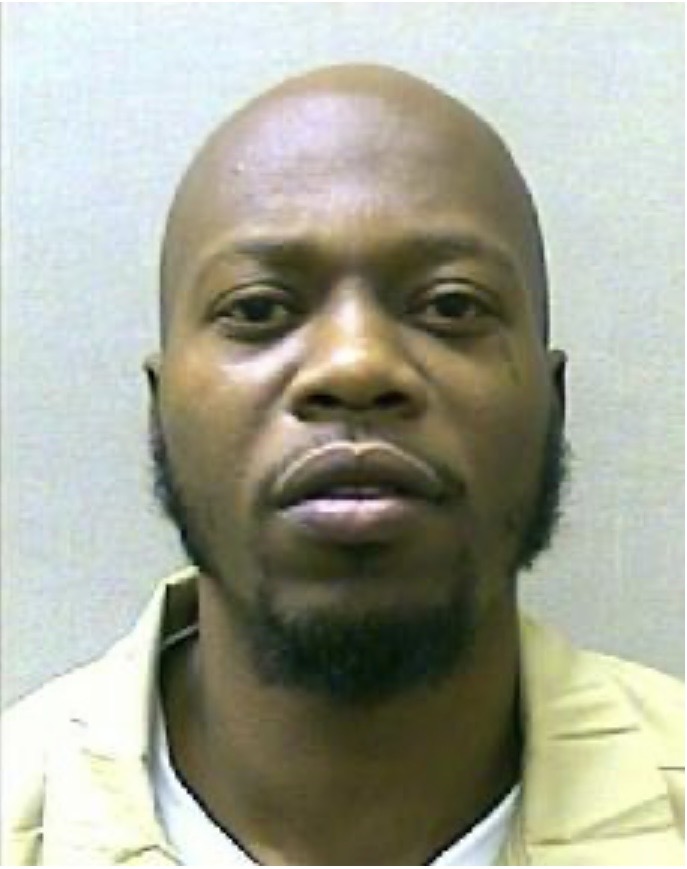
Lamar Alford
19 Years
Served so far
New Jersey
State
Murder, felony murder, robbery, and weapons offenses (Camden County Indictment 06-02269)
Conviction
19+
Years wrongfully imprisoned
68.75
Years before parole eligibility
0
Pieces of physical or forensic evidence linking him to the crime
2
Alibi witnesses never called to testify
25
Years Investigator Greer worked without ever conducting a live lineup
“That scared me. So I thought my way of getting out of all that was to roll with whatever was being said...I rolled along with the story that Detective Devlin made out for me.”
Case intelligence
The facts, the evidence, the open questions.
The facts, evidence, developments, and unanswered questions surrounding this case.
The story
Lamar (Lance) Alford was convicted in a March 2007 Camden County jury trial for the May 22, 2005 shooting death of Salvador "Alex" Martinez in East Camden, New Jersey, and sentenced to life plus ten years. No physical, forensic, or weapons evidence linked him to the crime; the State's case rested entirely on eyewitness identifications obtained through single-photo showups and testimony from witnesses with undisclosed incentives. He remains incarcerated at New Jersey State Prison after more than 19 years.
What we know
Murder, felony murder, robbery, and weapons offenses (Camden County Indictment 06-02269)
Conviction, 2007
Life imprisonment plus ten years, with a mandatory 68.75 years before parole eligibility
Sentence
New Jersey
State
What raises questions
Suggestive single-photo identification procedures, coerced and threatened eyewitnesses, Brady/Giglio violations involving concealed benefits to state witnesses, official misconduct by investigators Martin Devlin and Frank Falco, ineffective assistance of trial counsel including failure to present alibi witnesses, and failure to investigate alternative suspects.
The evidence
Evidence of innocence
No physical, forensic, or weapons evidence
No physical evidence linked Mr. Alford to the crime and no forensic evidence connected him to the scene. No murder weapon was ever recovered that tied him to the shooting.
Sworn alibi from mother and girlfriend
Gloria Alford and Ayesha Rivera both provided sworn affidavits stating that Lamar and Ayesha arrived at Gloria's house from South Camden by 9:00 p.m. on May 22, 2005 and did not leave again that night. The murder occurred at approximately 9:50 p.m. in East Camden, meaning he could not have committed it.
Alternative suspect Elijah Mack
Elijah Mack had ongoing conflicts with Salvador Martinez over drug territory disputes near 31st and Rosedale, was seen in the immediate vicinity roughly 30 minutes before the shooting, and had no verifiable alibi. Witness Dia Singletary told investigators the day after the murder that a man called "Ghost" or "Ghostface" committed it, and records show Mack used the street name "Ghostface."
Physical description mismatch
Witnesses described the taller perpetrator as approximately 6 feet tall. Mr. Alford's height and build do not match that description as closely as Mack's physical characteristics.
Uninvestigated "Romulo" lead
Juana Montes told investigators she heard at the victim's funeral that "Romulo" committed the murder, that Daysi Jarquin said the victim owed her son Romulo money, and that she had witnessed Romulo and the victim fight. Investigators never followed up on this lead.
"Ghostface" lead abandoned
Investigators interviewed brothers Melvin and Gregory Banner, who used the nicknames "Ghost" and "Ghostface," and Gregory admitted he had spoken to Carol Lofland about the Martinez homicide. Investigators never followed up with Lofland or conducted any identification procedures regarding "Ghostface" with eyewitnesses.
Newly discovered evidence
Kim's post-trial plea agreement
On Monday, March 12, 2007 — the first business day after Thia Kim's March 8, 2007 testimony and two days after the guilty verdicts — the State entered a plea agreement reducing Kim's third-degree weapons charges and recommending probation. The jury never learned of this arrangement.
Martin Devlin's later perjury charge and misconduct pattern
In 2021 Martin Devlin, who supervised the identification procedures and signed off on "almost all of the supplemental reports," was charged with perjury in Philadelphia and has been connected to "countless wrongful convictions" in Pennsylvania. Philadelphia Inquirer reporting describes his pattern of not documenting witness communications and then coaching witnesses to give incriminating statements.
Frank Falco's history of fabricating evidence
Frank Falco, who participated in witness interviews in Mr. Alford's case and helped ensure Jacob Eller testified, was involved in at least one other wrongful conviction and had a conviction reversed after fabricating an audiotape of an interview with a purported murder witness.
Due-process violations
Brady/Giglio violation as to Thia Kim
Kim testified he was "receiving no favorable treatment from the State" and was not "expecting it" while facing pending third-degree weapons charges, yet received a favorable plea within 96 hours of testifying. The defense could not cross-examine him about his expectation of benefits because prosecutors concealed that the deal was imminent.
Concealed incentives for Jacob Eller
Eller contacted prosecutors from Burlington County Jail in November 2005 seeking "help on his pending criminal charges," and stated he only helped investigators because he believed they would help him. Investigator Greer nonetheless testified that "no promises were made to Thia Kim or Jacob Eller concerning the charges pending against them."
Prosecutorial interference with cross-examination
At sidebar the prosecutor warned defense counsel: "Judge, if he delves too much into this, [counsel] is going to get a surprise and he's going to say something of being scared of the defendants." Defense counsel abandoned the line of inquiry, and the jury never learned the full extent of Eller's motivation to cooperate.
Single-photo showups instead of lineups
Camden County Prosecutor's Office investigators, supervised by Martin Devlin and conducted by John Greer, showed witnesses single photographs of Mr. Alford and his co-defendant rather than proper photo arrays or live lineups, in violation of New Jersey Attorney General Guidelines. Greer admitted he had never conducted a live lineup in 25 years of law enforcement.
Coerced custodial identification by Carol Lofland
Lofland first said she did not recognize the perpetrators, then refused to identify anyone out of fear, telling investigators "drug boys" and detectives were pressuring her and demanding "open the door and let me out, I'm going to leave." On June 24, 2005, while jailed on unrelated charges and unable to make a $300 bail, she was brought to the prosecutor's office and identified Mr. Alford from a single photograph.
Threatened identification by Thia Kim
Kim initially said that "because it was dark" he "could not see the faces of the subjects" and had no proof who the perpetrators were. After investigators threatened to subpoena him to a grand jury and told his mother the same, he changed his position within about an hour and identified Mr. Alford from a single photograph.
No adequate suppression hearings
The trial court admitted the identifications without adequate suppression hearings despite procedures that violated multiple constitutional protections and New Jersey identification guidelines.
Ineffective assistance of trial counsel
Trial counsel Edward Crisonino failed to move to suppress the constitutionally defective identifications, abandoned cross-examination of Eller on plea benefits after the prosecutor's warning, and placed both alibi witnesses on the witness list and had them wait outside the courtroom but never called them. Mr. Alford confronted his attorney about the alibi failure at the April 27, 2007 sentencing.
Tunnel-vision investigation
Investigators failed to investigate Mack's whereabouts, interview corroborating witnesses, include Mack's photo in arrays, examine the Mack–Martinez conflicts, or follow up on Dia Singletary's "Ghostface" statement. Police focused exclusively on Mr. Alford and ignored evidence to the contrary.
Unreliable evidence
Prosecutor conceded witnesses' unreliability
In opening statements Assistant Prosecutor Ira Slovin told the jury the witnesses "are not school teachers, not scout leaders. They are drug dealers and substance abusers." Defense counsel argued the case was "heavy with issues of contradiction and credibility" and that witnesses were "by their own admission either drunk or high on crack at the time of Martinez's killing."
Lillian Davis could not see faces
Davis testified she witnessed the shooting from 15 to 20 feet away but admitted she could not see the perpetrators' faces because it was dark: "I can't identify them. I didn't see no faces." Her account changed over time and included a claim of feeling the vibration of the body hitting the ground, suggesting exaggeration or coaching.
Unexplored "setup" statement
Davis testified that after the shooting Carol Lofland yelled "I told you it was a setup, I told you it was a setup." The court sustained a hearsay objection and told the jury to disregard it, but the statement suggests Lofland had advance knowledge of the attack and contradicts the State's theory of a spontaneous robbery.
Carol Lofland's evolving account
Lofland moved from saying she saw no faces and did not recognize the perpetrators, to refusing to identify anyone out of fear, to identifying Mr. Alford as "Bling" and claiming she had "known him for years" only after being jailed and transported to the prosecutor's office.
Thia Kim's compromised viewing conditions
Kim testified he saw the perpetrators' faces for "a couple of seconds, a minute or so" as they ran past him in the park, but had been drinking malt liquor and only looked up after hearing a cracking noise. The lighting, alcohol consumption, and brief viewing opportunity undermine his identification.
Jacob Eller's uncorroborated jailhouse account
Eller, described as a crack-addicted informant, was the only witness who claimed to have heard Mr. Alford discuss the crime beforehand, and the prosecution's drug-debt motive theory rested solely on his uncorroborated testimony. The day before he was scheduled to testify he sought immediate release from a warrant, saying he was afraid for his "family."
The cost
Impact on family
Lamar Alford was 25 and single at the time of his arrest, and the father of a 6-year-old child. He was trying to attend school for HVAC when the case interrupted those plans. His arrest separated him from his child during years when that child was growing up.
Impact on community
Before his arrest, Lamar was known for giving back to the kids in his neighborhood, and that involvement ended when he was taken into custody. The person who actually committed the crime was killed in 2018; according to rumor, he had wanted to come forward but did not know how. Whatever account he might have given was lost with him.
Case timeline
2007
Conviction
Murder, felony murder, robbery, and weapons offenses (Camden County Indictment 06-02269)
Present
Active case
Where it stands
Active case
This case is active. Xonorate continues to advocate for a new look at this conviction.
Take action
No active petition for this case yet.
Want to understand the issues surrounding this case?
Ask Xonorate can help you explore the research, legal framework, and related Xonorate material.
Ask Xonorate →More cases
Comments
Sign in to leave a comment.